The Reaching: What AI Will Never Learn About You
My daughter reached for the light before she had a word for it. I build AI for a living — and that gesture undid everything I thought I knew about what a mind is.
My daughter is six months old. She has never heard the word for light.
But she reaches for it.
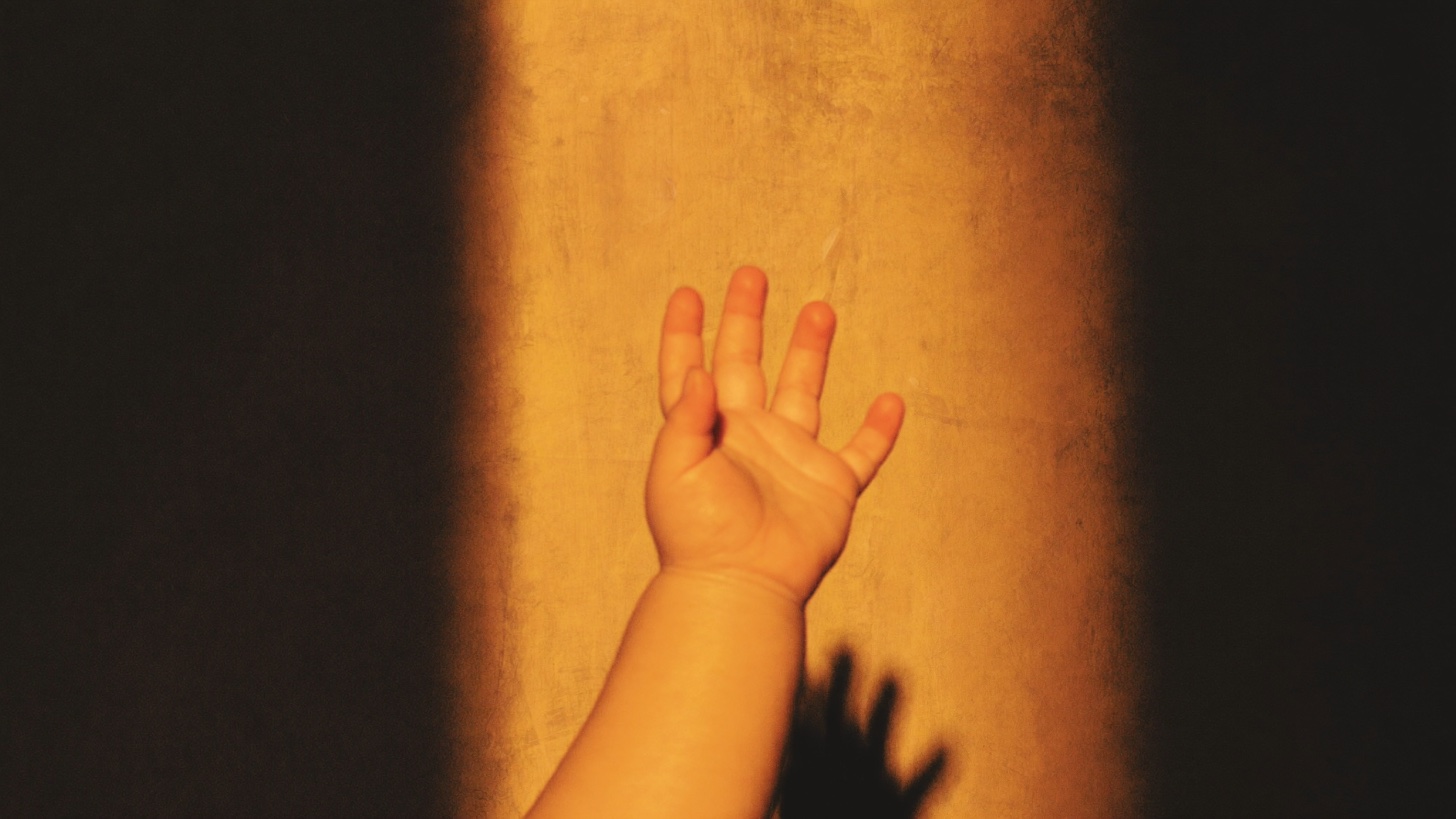
One afternoon I was watching her from across the room — she was lying on her back, and a band of late sunlight had moved along the wall above her. Her arm came up. Fingers spread wide. Reaching. Not at the wall. Not at the air. At the light itself. Her inner sense knew what to want before her tongue knew what to name it.
I am an AI researcher. I spend my days building systems that learn, that reason, that generate text indistinguishable from a trained human's. And what I saw in that gesture — small arm, open hand, certainty without language — stopped me in a way that no benchmark result ever has.
Because I realized: I could not defend it. Whatever she was doing, a machine would be able to do it soon. A robot arm will reach. A vision system will track the light with more precision than her soft, imprecise baby muscles. A language model will describe her reaching using phrases like pre-linguistic embodied cognition and those phrases will be correct.
There is no capability gap I can defend here.
So then what is the real question?
You Are Not Your Phone
The question I want to hold is not whether machines will match what humans do. That race is already decided, and we are arguing about the margin. The real question is what humans are — beneath what they do.
Let me start where most people live: their phone.
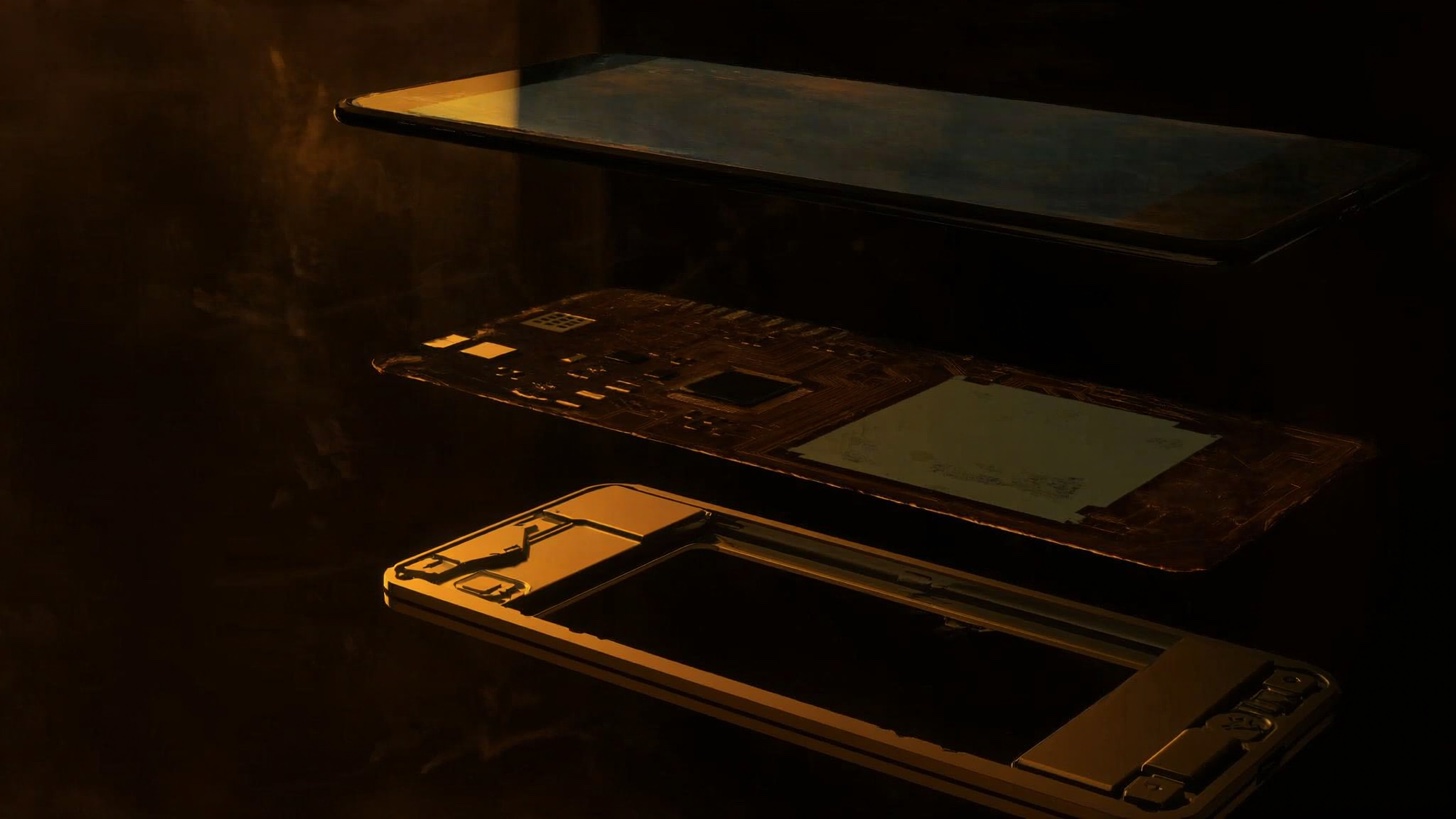
Look at your phone. Three layers. The body — glass, aluminum, chips. Real. Holdable. Also completely inert: pull the battery, it is a brick. The mind — the software, the apps, the thoughts scrolling across the glass. Real, but weightless, uncatchable. The identity — your account. Your name, your photo, your follower count, your curated grid. The version of you that the world scrolls past.
Three layers. All of it running. None of it is you.
The phone has no idea it has an owner.
Now replace the phone with yourself. Your body — the same: inert matter, organized into extraordinary complexity, animated by something it cannot name. Your mind — the apps: thoughts arriving, reactions firing, preferences accumulating, beliefs hardening from memories you can barely access. Your identity — the account: the job title, the role, the story you tell at dinner parties about who you are.
We spend almost all of our waking lives tending the account. We optimize the apps. We upgrade the hardware. We are almost entirely convinced that this three-layer stack is us.
And this is exactly where the machines will catch us.
AI can learn your account. It will do this with high fidelity, probably within this decade — your preferences, your patterns, your reaction-profile, the shape of your beliefs and how you arrived at them. It can learn your apps: the thought-patterns, the habits, the emotional loops. It is already learning these from your behavioral data, one session at a time.
The machines are coming for the version of us that is already mostly machine.
If you are identical to your data — your account, your patterns, your learned responses — then you are replaceable. Not as a threat. As a mathematical fact.
So the question becomes urgent: is there anything you are that is not your data?
What Can Hold the Light
The ancient Indian philosophical tradition had an answer to this. Not a comforting answer — a precise one.
Look at the progression: a rock, a dog, a human. The rock almost does not reflect light. A dog's eyes hold it — warm, present, dreaming. A human reflects it so brilliantly that the West gave the phenomenon a name, called it "consciousness," and assumed it was ours. Something we possess. Something we generate.
The more honest word — used in the tradition for over three thousand years — is Chetna. Sentience. Reflected light. Borrowed, at every moment, from a source that was never us. The screen does not generate the picture; it only catches the beam. A better screen, a more complex nervous system, catches more. But the light was never the screen's property.
The screen itself — the awareness behind every experience — the tradition calls Ātma. Not the body, not the mind, not the identity. The one who is watching. Pure presence. Already there before the first thought of the morning arrives. Still there after the last thought dissolves in sleep.
You want proof it exists? Tonight you will sleep. Deeply, dreamlessly. Body off. Mind off. Name and role and account, all dark. Every layer of the phone, powered down. And tomorrow morning, before the first thought arrives, you will know one thing without being told: I was.
That "I was" — registered from a state where no layer was running — points to what was there before the phone was built. And what remains when it breaks.
This is not mysticism. It is careful phenomenology. The tradition was making a claim that can be investigated from the inside: there is an awareness prior to and independent of all the content that arises within it. The content is computable. The awareness is the witness.
The Gap Closing from Both Sides
Now here is the part that nobody in my industry is talking about.
While we have been debating whether AI will become conscious — something else has been happening. To us.
AI does not need to become conscious to replace most of what modern humans do. It only needs to match what we already are. And what most of us already are, most of the time, is: running on dopamine loops, inherited beliefs, unexamined reactions we last updated at age eight, preferences absorbed from advertisements we cannot remember watching.
This bottom layer of human cognition — the conditioning, the reflex, the algorithmic-feed-shaped personality — is computable. It is being computed. The models will compute it more efficiently than we do.
At the same time: most modern humans have quietly stopped being what they were. The hours inside the feed. The thoughts that arrive pre-formed. The emotions we never examine but merely perform. The beliefs we would struggle to defend if pressed.
Two curves. AI rising toward us. We sinking toward it. The gap closes not because AI leaps to our level but because both lines move toward the same middle.
The honest thing to say here is: I do not know where I am on that graph. I build systems by day and try to read the Upanishads at night, and I am not certain which direction I am traveling. What I can say is that the noticing — the discomfort right now, reading this, something in you that stirs at the word sinking — that noticing is not the algorithm. The algorithm did not produce your awareness of this sentence. That awareness is the thing the graph does not touch.
But it is fragile. Not because it can be taken. Because it can be forgotten.
The Return
My daughter has not yet forgotten.
When I watch her reach for the light, she is not pursuing an algorithmic suggestion. She has not inherited her grandmother's beliefs. She has no trained preferences. Her reaching is awareness meeting the world before a single layer of conditioning has been installed between them.
She is standing on the ground. Still. Without knowing she is.
I watched her from across the room and I realized: I used to stand there too. We all did. Before the phone, before the feed, before the thousand micro-choices we make daily on behalf of our account rather than our awareness. There was a version of me that reached the way she reaches — exact, unconditioned, reaching at light rather than at things.
I do not know if I still do.
One day she will have the word. She will look up at me and ask: "Papa, what is light?"
And I think I will kneel down and tell her: the reaching came first. The name came second. Do not let anyone — not me, not your teachers, not the machines — make you forget that order.
By then, the machines may answer her better than I can. They will have matched the reaching, the naming, maybe even the wondering. All of that is process, and process can be computed. But the awareness watching the process — the screen receiving the light, not the light itself — is not an achievement to be surpassed. It is the ground. It was always the ground.
The Māṇḍūkya Upaniṣad, one of the oldest and shortest philosophical texts ever written, closes with a single declaration:
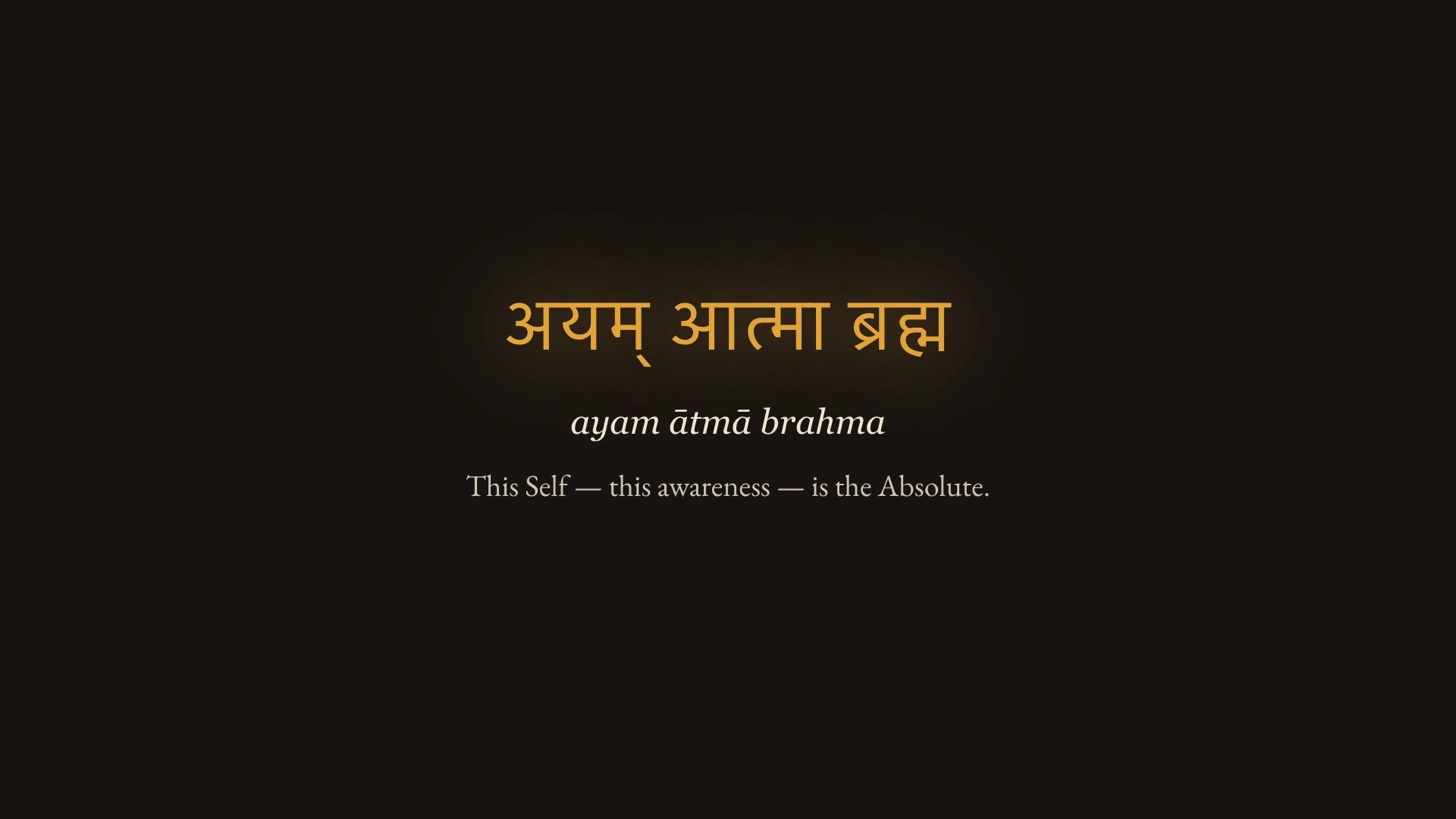
Ayam Ātmā Brahma — This Self, this awareness, is the Absolute.
Not your thoughts. Not your achievements. Not your account. The awareness itself — the one that was there before your first word and will be there in the gap between your last two — is the thing the text is pointing at. The same text has been pointing at it for twenty-six hundred years, and we keep walking past it to look at the screen.
The question is not what machines will become.
The question is what you will remain.
This essay is the written companion to "The Reaching" — the debut episode of My Honest Diary. The film follows the same arc in twelve minutes of narration, original score, and silence. Watch it on YouTube →
Varun Pratap Bhardwaj
AI Agent Reliability Researcher & Builder
Stay Updated
Weekly insights on AI agent reliability, new research, and tools I'm building. No spam, unsubscribe anytime.